Tags: #20th Century#AmericanPoets
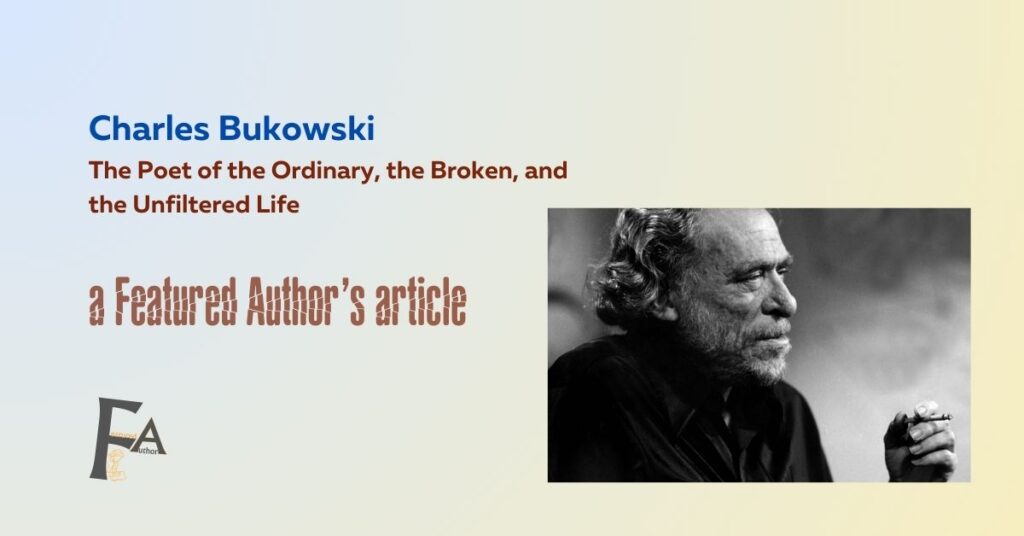
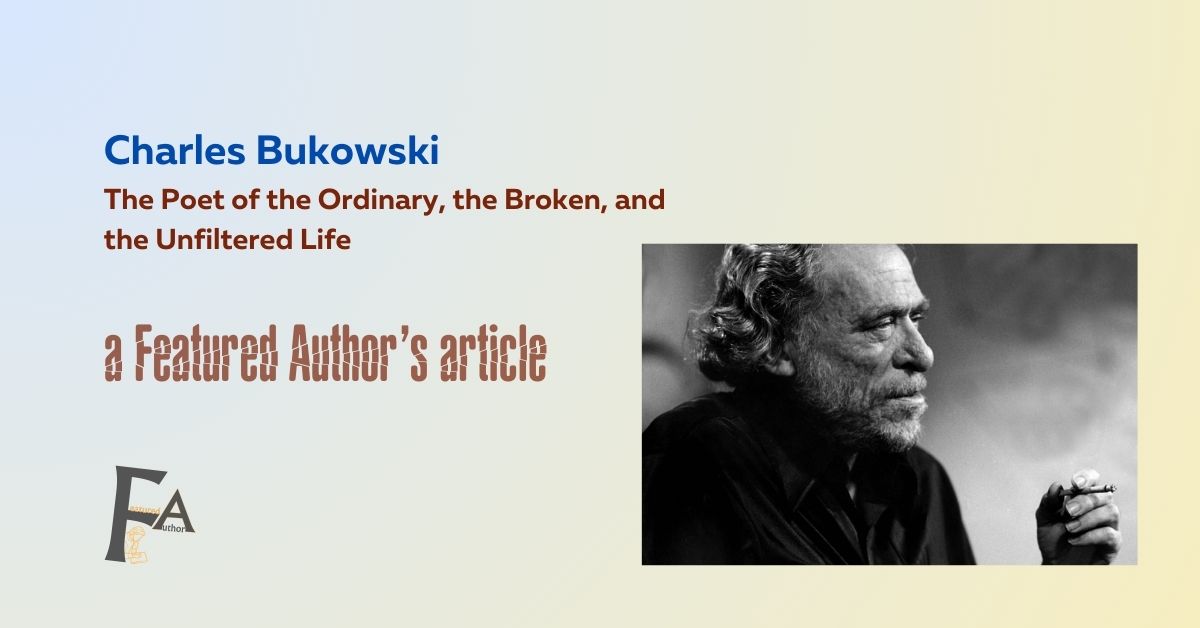
Charles Bukowski remains one of the most polarising and widely read literary figures of the twentieth century. Readers tend to fall into two groups when they encounter his work for the first time. Some are immediately drawn to the raw honesty of his voice, the strange tenderness hidden beneath his cynicism, and the blunt humour that runs through his poems and novels. Others are unsettled by the harshness of his language, the relentless drinking, the bleakness of the environments he describes, and the unapologetic way he exposes human weakness. What cannot be denied is that Bukowski created a literary voice that is unmistakably his own.
Born in 1920 in Andernach, Germany, and raised largely in Los Angeles, Bukowski spent much of his life on the margins of American society. His early years were marked by poverty, a violent father, social isolation, and an overwhelming sense that he did not belong anywhere. Instead of romanticising struggle, he wrote about it directly. His characters drift through cheap apartments, racetracks, bars, and temporary jobs. They fail repeatedly. Yet they also survive. Bukowski’s writing suggests that life’s dignity often lies not in success but in persistence.
Bukowski’s Writing Vision and Philosophy
Bukowski believed that literature should come from lived experience rather than intellectual pretence. He disliked what he saw as overly polished or academic writing. In interviews, he often mocked writers who tried too hard to appear profound. For him, authenticity mattered more than elegance. If a sentence felt honest, it deserved to remain on the page even if it violated literary conventions.
His writing philosophy was rooted in observation. Bukowski spent decades working ordinary jobs such as a postal clerk, a warehouse worker, and a factory labourer. These experiences shaped his literary imagination. Instead of writing about heroic figures or grand adventures, he focused on bartenders, gamblers, drifters, struggling writers, and people who moved quietly through society without recognition. He saw poetry in their endurance.
Another defining element of Bukowski’s outlook was his scepticism toward authority. Institutions such as corporations, schools, and cultural elites appear frequently in his work as oppressive or absurd. His characters often resist these structures not through organised rebellion but through personal refusal. They drink, write, gamble, wander, and sometimes simply withdraw from expectations imposed by society.
Yet Bukowski’s worldview was not entirely bleak. Beneath the rough exterior, there is a persistent fascination with beauty. He could describe a sunset over a rundown neighbourhood with genuine affection. He admired small moments of freedom, such as sitting alone with a drink and a typewriter or watching the quiet movement of the night city. His work suggests that meaning does not necessarily arrive through success or recognition but through the simple act of continuing to live.
Bukowski’s Style and Literary Voice
Bukowski’s style is immediately recognisable. His sentences tend to be direct and uncluttered. He rarely indulges in elaborate metaphors or decorative language. Instead, he writes in a rhythm that feels close to spoken conversation. This approach gives his writing a sense of immediacy. Readers often feel as if they are listening to someone recount a story at a bar late at night.
His poetry especially reflects this stripped-down approach. Bukowski helped popularise a style sometimes called “dirty realism,” though he never seemed particularly interested in labels. His poems often begin with an ordinary observation and slowly reveal something darker or unexpectedly moving beneath the surface.
Another key element of his style is repetition of experience. Many of his stories revolve around the same environments and situations. Bars, cheap rooms, racetracks, failing relationships, and the struggle to keep writing appear again and again. Some critics initially dismissed this repetition as a sign of limited imagination. Over time, readers began to recognise that Bukowski was deliberately exploring the rhythms of ordinary survival.
His most famous fictional persona is Henry Chinaski, a semi-autobiographical character who appears in several novels and stories. Through Chinaski, Bukowski blurs the line between autobiography and fiction. Chinaski drinks heavily, writes constantly, and moves through a world of temporary jobs and chaotic relationships. The character allowed Bukowski to transform his own life into literary material without pretending that he was writing a traditional memoir.
Must-Read Books by Charles Bukowski
Post Office
This was Bukowski’s first novel and remains one of his most widely read works. The book follows Henry Chinaski through years of exhausting work at the United States Postal Service. What makes the novel memorable is not the plot but the tone. Bukowski captures the suffocating monotony of bureaucratic labour while injecting dark humour into every situation. The novel also marks the moment when Bukowski left his postal job and began writing full-time, turning a lifetime of frustration into literature.
Factotum
In this novel, Bukowski explores the drifting life of Chinaski as he moves from job to job across America. The word factotum refers to someone who performs many different kinds of work, usually without recognition. Chinaski’s experiences include warehouse labour, factory shifts, and countless dismissals from employers who find him unreliable or indifferent. The novel offers a sharp look at working-class survival while also revealing Bukowski’s commitment to writing even when his circumstances are unstable.
Women
This book examines the chaotic romantic life of Chinaski after he gains literary recognition. The narrative moves through a series of messy, humorous, and painfully honest relationships. Bukowski does not attempt to present himself or his fictional counterpart as admirable. Instead, he exposes the contradictions and insecurities that shape his interactions with women. Despite its controversial elements, the novel offers an unfiltered exploration of loneliness, desire, and ageing.
Ham on Rye
Many readers consider this to be Bukowski’s most powerful novel. Unlike his other works, which largely focus on adulthood, this book looks back on the difficult years of his youth. It portrays a childhood shaped by poverty, bullying, severe acne, and a violent father. The title refers to a simple meal, symbolising both poverty and survival. The novel reveals how these early experiences formed the emotional foundation of Bukowski’s later writing.
Love Is a Dog from Hell
Bukowski’s poetry often captures moments that his novels only briefly touch upon. This collection explores loneliness, failed relationships, and the fragile beauty hidden within harsh environments. The poems are simple in structure but emotionally direct. They reveal Bukowski at his most reflective, showing that behind the rough exterior lay a writer deeply aware of human vulnerability.
The Last Night of the Earth Poems
Published later in his life, this collection feels quieter and more contemplative than his earlier work. The poems reflect on ageing, mortality, and the strange persistence of creativity. Bukowski continues to write about everyday experiences, but there is a growing sense of calm observation rather than rebellion. Readers often find this book moving because it shows a writer who has survived decades of chaos and is now reflecting on the journey.
Bukowski’s Place in Modern Literature
Bukowski’s literary reputation has grown steadily since he died in 1994. During his lifetime, many critics dismissed him as crude or excessive. Yet readers continued to discover his work and recognise its honesty. His writing captured aspects of American life that were rarely discussed in mainstream literature.
Today, Bukowski is often seen as an important voice within twentieth-century countercultural writing. His influence can be seen in contemporary poets and novelists who embrace direct language and autobiographical honesty. At the same time, his work continues to spark debate about gender, addiction, and the boundaries of literary realism.
What keeps readers returning to Bukowski is not simply the rebellion in his writing but the strange compassion that lies beneath it. He wrote about people who fail repeatedly yet continue to move forward. His characters may be cynical, but they are rarely defeated.
In the end, Bukowski’s work reminds us that literature does not always emerge from comfort or stability. Sometimes it grows out of long nights, cheap rooms, broken relationships, and the stubborn decision to keep writing anyway.
Atul for Featured Author